Logistics Advice
Container haulage: a step-by-step booking guide
By the Princess Courier & Logistics teamUpdated
How to book import and export container haulage between UK ports and your site, from the details you need to the empty return.
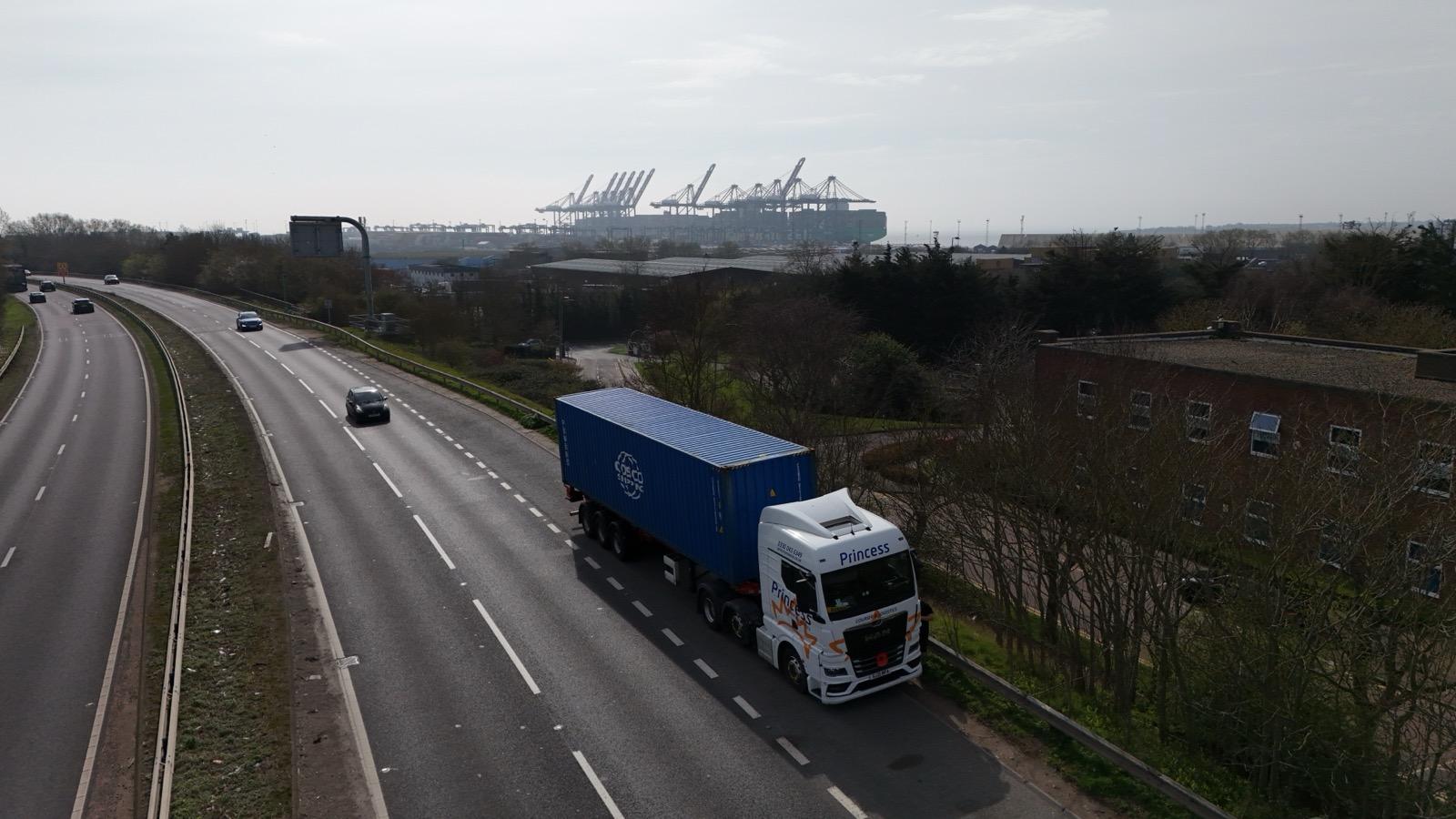
Booking container haulage for the first time can feel like learning a new language: release references, terminals, demurrage, empties. The process is straightforward once you know the steps and have the right information to hand. This guide to container haulage UK bookings walks through a typical import or export container move between a UK port and your site, step by step.
Container haulage UK: what it means
Container haulage is the road leg of a sea freight journey. For an import, a haulier collects the loaded container from the port terminal and delivers it to your warehouse or site. For an export, the haulier takes the container from your site to the port in time for loading on the ship. Either way, the shipping line, the terminal and your freight forwarder (if you use one) all affect when the container can move, so timing needs planning.
Our container haulage service covers moves between Felixstowe, London Gateway, Southampton and Tilbury and your site, on our own trucks and through trusted partner hauliers. If your container is at another UK port, ask us.
Step 1: know your container
Containers come in a few standard sizes, and the haulier needs to know which you have:
- 20ft container: the smaller box, often used for dense or heavy goods.
- 40ft container: twice the length, for bulkier or lighter cargo.
- 40ft high cube: the same length as a 40ft but taller, typically about a foot higher.
There are also refrigerated, open-top and other specialist types. The size and type affect which truck and chassis are needed, and the gross weight affects what is safe and legal on the road. Check the exact figures on your shipping documents rather than relying on typical values.
Step 2: gather the booking details
The more complete your first message is, the faster you get a firm price. We typically need:
- the port and terminal;
- container size and type;
- gross weight;
- the release or booking reference, and when the container is available;
- the delivery or collection address, with any time window;
- how the container will be unloaded or loaded at your site;
- whether an empty container has to be returned, and where.
Your freight forwarder or shipping line can usually supply the reference numbers and availability dates. If you are not sure about something, say so and we will tell you what is worth checking.
Step 3: check the release and availability
A container cannot be collected until it has been released, and release depends on things outside the haulier's control, such as the ship's arrival, duties and charges being cleared, and the shipping line's own release process. Customs and import formalities are handled separately by you or your forwarder, so confirm with them that everything is cleared before you book a collection time.
For exports, the port usually sets a window when it will accept containers, often called a cut-off. Booking container haulage without checking that window is a common cause of delay.
Step 4: get a quote and confirm the move
Send the details through our quote form (no account needed), or call or WhatsApp us. We confirm the truck, the timings and the price with you before the job is booked, and tell you whether it runs on one of our own trucks or with a partner haulier. Ask about anything that could add cost, such as waiting time, an empty return to a different location, or a delivery at a restricted time.
Step 5: prepare your site
A container delivery fails more often at the receiving end than on the road. Before the truck arrives, check:
- Access. Can a container lorry reach the unloading point? Low bridges, tight turns and weight-restricted roads matter.
- Space. Is there room to turn and to open the doors?
- Unloading. Do you have the staff, equipment and time? Hand-balling (unloading by hand) a full box takes many hours, while a forklift can be much faster.
- Opening hours. Will someone be there to receive it?
- Empty return. Do you know where the empty container goes and by when?
Tell us about any site rules, security procedures or appointment systems when you book.
Step 6: the day of the move
On the day, the driver collects the container, delivers it to your site (or takes it from your site to the port for an export) and the unloading or loading takes place. We keep you updated by phone or WhatsApp. We do not offer a live tracking link, so if you need to know where the truck is, message or call and we will check with the driver. Port terminals have working hours and queues, so a time quoted in advance is a plan, not a promise, and no delivery time can be unconditionally guaranteed.
Step 7: proof of delivery and the empty return
When the job is done, you receive proof of delivery as a photo and signature, or a PDF by email. For imports, the empty container usually has to go back to a depot or terminal within a set period. Delay can lead to charges from the shipping line, so agree the return before the box is delivered. Check the free time in your shipping line terms.
Onward delivery after the container is unloaded
Often the container is only the first leg. Goods may need to go on to several addresses: stores, customers or another warehouse. Because we run everything from small vans to artics, goods from the container can go on as same day or planned jobs. See our guide to HGV haulage for the larger vehicles, or pallet delivery if the stock is going out in smaller quantities.
Questions worth asking about timing and cost
Container haulage has more moving parts than a standard delivery, so a few questions early save arguments later. Ask your haulier what happens if the terminal is busy and the truck waits, whether waiting time is charged, and what is assumed about unloading time at your site. Ask your shipping line or forwarder how many days of free time you have before storage or container detention charges can start. None of this is unusual, and a good provider will explain it plainly before the job is booked.
If your goods then need to move on quickly, tell us at the same time. Planning the port leg and the onward leg together is easier than fitting a second booking around the first.
Common mistakes to avoid
- Booking a collection before the container is released.
- Leaving the gross weight blank or guessing it.
- Not checking that the delivery site can take a container lorry.
- Forgetting the empty return and the charges that can follow delay.
- Assuming the goods are covered for their full value without asking. Declare the value of the goods in the container when you book, and ask for the cover for your move in writing.
For more on preparing a job, read our advice on delivery instructions and our delivery contingency plan.
Frequently asked questions
Which ports do you cover?
Felixstowe, London Gateway, Southampton and Tilbury. If your container is at another UK port, ask us.
Do you use your own trucks?
We use our own trucks and trusted partner hauliers for container haulage. Ask when you book and we will tell you which applies to your container.
How far ahead should I book?
As soon as you have the release or booking reference and know the availability date. Earlier notice gives more choice of timing, though we take bookings 24/7.
Can you collect a container at night?
We take bookings around the clock. When a container can be collected depends on the terminal's working hours and when it is released.
Can you also handle customs clearance?
Customs formalities are normally handled by you or your freight forwarder. If you are unsure what applies to your shipment, ask us and we will explain what we can and cannot do.