Logistics Advice
Part load vs full load: how to choose
By the Princess Courier & Logistics teamUpdated
Should you book a part load or a full load? How much each vehicle carries and what drives the price.
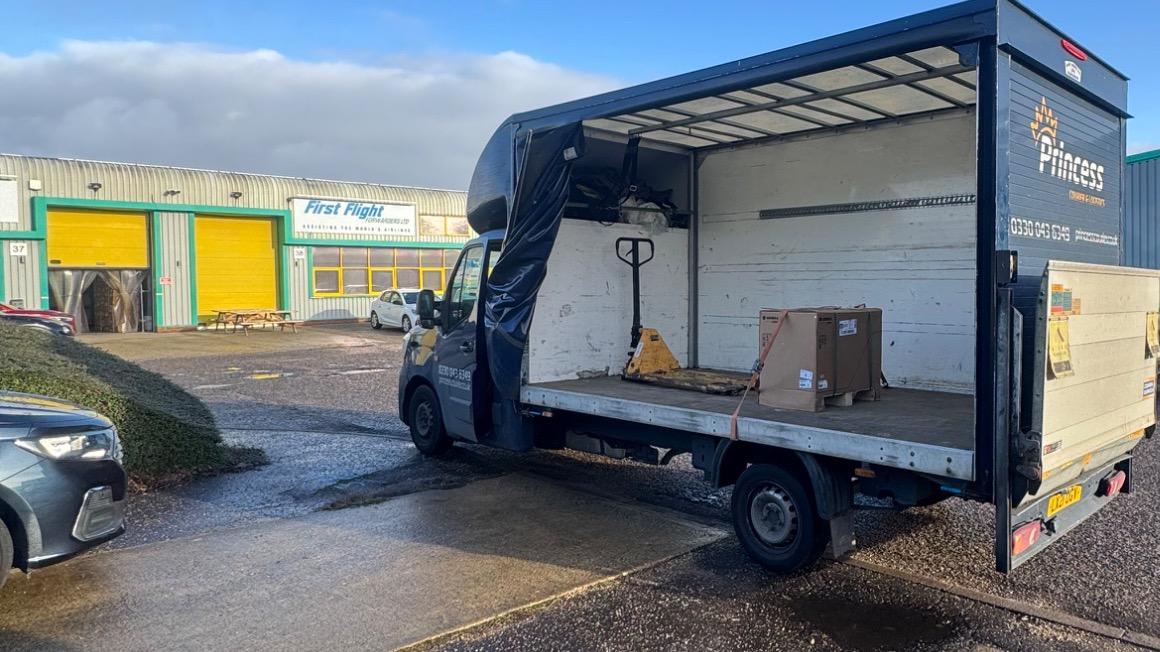
Whether to book a part load or a full load is one of the most common questions in road freight, and one of the easiest to get wrong. Pay for a full lorry you only half fill and the cost per pallet climbs. Squeeze too much onto a smaller vehicle and something does not fit on the day. This guide explains part load vs full load, what each means, and the factors that move the price, so you can choose with confidence.
Part load vs full load: what is the difference?
The terms are used a little differently across the industry, so it is worth confirming what a provider means. In general:
- A full load means you use a whole vehicle for one job: one lorry, one collection, one delivery, nothing else on board.
- A part load means your goods occupy only part of a vehicle, for example four pallets on a lorry that could carry many more.
The key question is whether the vehicle is yours alone or shared. Some part loads are shared with other customers' goods, which usually means collections and deliveries in a sequence and a longer journey. A part load on a dedicated vehicle is yours alone even though the space is not full. With us, a haulage job is a dedicated vehicle from collection to delivery, with no transfer on the way. See our HGV haulage page for the vehicles involved.
How much fits in each vehicle?
Start by working out what you have. Typical capacities from our fleet are:
VehiclePalletsMaximum weight Small vanUp to 1400 kg Long wheel base vanUp to 31,200 kg Luton vanUp to 61,000 kg 7.5 tonneUp to 102,500 kg 18 tonneUp to 149,000 kg Artic (13.6 m trailer)Up to 2626,000 kgThese are guides. Pallet size, double stacking and tall loads change the count. Weight usually runs out before space does, so always check both. A Luton fits six pallets but carries only 1,000 kg in total.
When a full load makes sense
A full vehicle is usually the right choice when:
- you have enough goods to fill most of a vehicle anyway, so the cost per pallet is reasonable;
- the load must arrive fast and direct, with no stops for anyone else's goods;
- the goods are fragile or high value and you want minimum handling;
- the load is bulky, awkward or heavy and needs the space.
With a full load you control the schedule: the vehicle goes from A to B on your timing, not on the timing of other customers' drops.
When a part load makes sense
A smaller vehicle, sized to the load, is often the better value when:
- you have a few pallets, not a lorry's worth;
- there is no urgent deadline and a shared service is acceptable;
- cost matters more than speed.
For a handful of pallets that must arrive the same day, the smart move is often to step down to the right-sized vehicle instead of booking an artic for a few pallets. Our pallet delivery service sends the size that fits the load, from a small van for one pallet up to an artic for 26.
What affects the cost?
We do not publish fixed prices because the cost depends on the job. The main factors, which hold across most providers, are:
Distance and route
Longer journeys cost more, and the route matters as well as the mileage. A busy urban drop is slower than a motorway run.
Vehicle size
A bigger vehicle costs more to run. Choosing the smallest vehicle that safely carries the load is the biggest saving you control.
Timing and urgency
A vehicle that must be there within the hour costs more than one booked days ahead. Same day jobs, nights and weekends can reflect that. We aim to collect within 30 to 60 minutes where possible, subject to availability, and confirm a collection time before a vehicle is sent.
Load profile
Weight, pallet size, height and fragility all matter. Overweight or oversized pallets may need a different vehicle than the pallet count suggests.
Loading and unloading
Waiting time, restricted access, and whether there is a forklift at each end can all affect the job. If neither end has a forklift, you may need a Luton with a tail-lift, which has a 1,000 kg payload and needs a hard, level surface.
Number of drops
More stops mean more time. Multi-drop runs can still beat several separate jobs, because one vehicle and driver covers them all.
How to get the best price without cutting corners
- Be precise. Accurate pallet counts, sizes and weights prevent a surprise vehicle change on the day.
- Combine where you can. If several pallets are going the same way, one vehicle is usually cheaper than several.
- Book ahead for planned work. Give us dates, routes and loads in advance for regular runs so we can plan vehicles and drivers.
- Be flexible on timing where you can. A wider collection window often gives more options.
- Prepare the goods. Pallets ready and wrapped at the agreed time avoid waiting charges and delays. Our guide to preparing goods for courier collection helps.
For more ideas, see our article on how to reduce business transport costs.
A worked example
Imagine you need to move eight pallets, each about 400 kg, from a warehouse in Cambridgeshire to a customer in the Midlands. That is around 3,200 kg and eight pallets. A Luton or a 7.5 tonne would not carry it all (the 7.5 tonne is limited to 2,500 kg), so an 18 tonne rigid, with space for up to 14 pallets and a 9,000 kg payload, is the natural fit. You are booking a dedicated vehicle that is only partly full, and that is a perfectly sensible choice: a part load on a vehicle of your own. An artic would carry it but would be more vehicle than you need.
Change the facts to 24 pallets and the artic becomes the sensible choice, because the vehicle is nearly full and the cost per pallet drops.
Not sure which to choose?
Tell us the pallet count, the weight, the size of the largest item, the postcodes and when it must arrive, and we will recommend a vehicle. Use our quote form (no account needed), or call or WhatsApp us at any hour. We keep you updated during the job by phone or WhatsApp. We do not offer a live tracking link. Proof of delivery is a photo and signature, or a PDF by email.
Frequently asked questions
What is the maximum I can put on an artic?
Up to 26 standard pallets within a 26,000 kg payload. The trailer load space is 13.6 m long, 2.4 m wide and 2.7 m high.
Is a part load always cheaper than a full load?
Not always. A part load on a shared service can be cheaper but slower. A part load on your own vehicle still pays for the whole vehicle's journey, so a full vehicle is often better value per pallet if it is mostly full.
Can I switch vehicle size after booking?
Tell us as soon as the load changes. A different size may change the price and the availability, so it is best to confirm the final pallet count and weight before collection.
Will my goods be transferred to another vehicle?
On a dedicated job, no. The same vehicle collects and delivers.
Do you do same day full loads?
Often, yes. It depends on where the nearest suitable lorry is across our own trucks and partner network. We confirm a collection time before you commit, and no delivery time is unconditionally guaranteed.